Freya Roth · 27 September 2026
Shifts in Automated Reconciliation Protocols Across Niche Bond Platforms During Market Volatility Periods
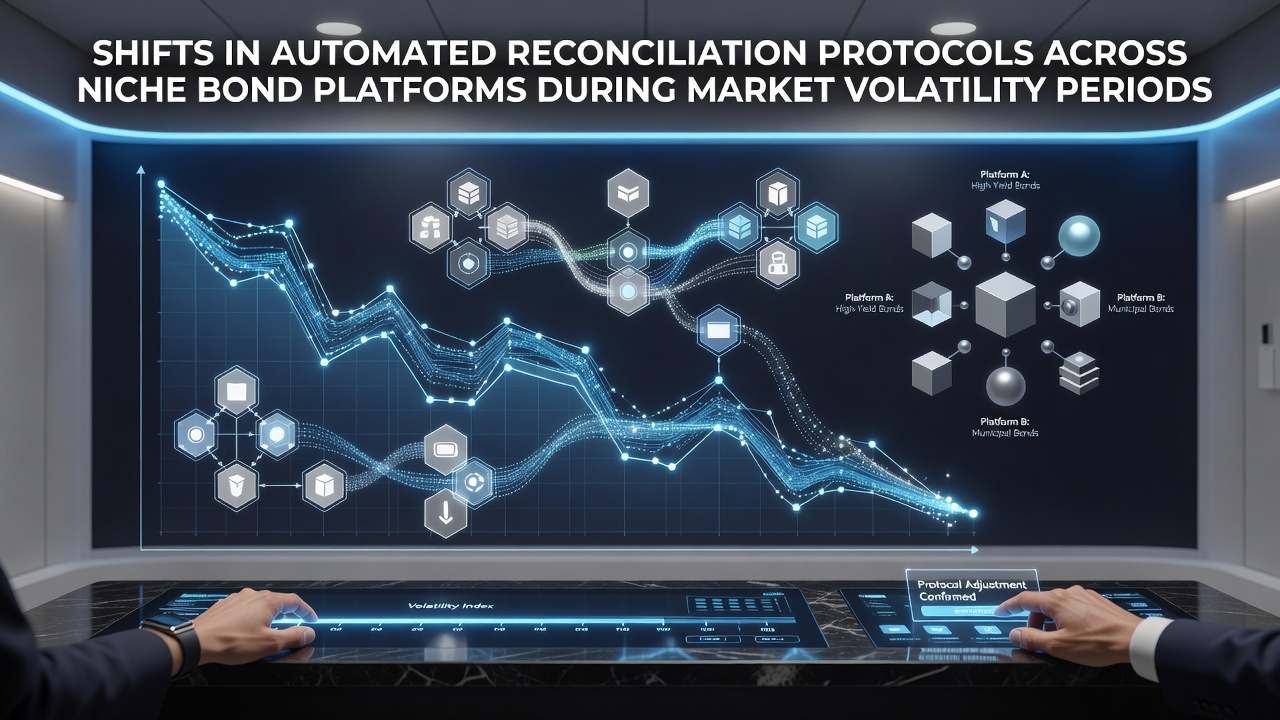
Market volatility has prompted niche bond platforms to adjust their automated reconciliation protocols in measurable ways, with data from regulatory filings showing increased adoption of real-time matching algorithms and exception-handling routines that reduce settlement lags. Observers note these changes occur most visibly when bond yields swing beyond established thresholds, forcing systems to process higher volumes of mismatched trades within compressed timeframes.
Core Elements of Reconciliation in Specialized Bond Environments
Niche platforms handling corporate and municipal bonds maintain reconciliation engines that cross-reference trade details against clearinghouse records, custodian reports, and internal ledgers, and these engines rely on predefined tolerance bands for price, quantity, and settlement dates. Researchers at academic institutions have documented how platforms serving smaller issuers incorporate machine-learning models that flag anomalies faster than legacy rule-based systems, particularly when intraday price movements exceed two standard deviations from recent averages.
Protocol Adjustments Observed in Recent Cycles
During periods of elevated volatility platforms have shifted from batch-processing reconciliation at end-of-day to continuous synchronization cycles that run every fifteen minutes, and this transition stems from requirements outlined in updates issued by the U.S. Securities and Exchange Commission alongside parallel guidance from the European Securities and Markets Authority. Data shows that platforms adopting these shorter cycles reduced failed settlement rates by measurable margins in the first half of 2025, with further refinements expected ahead of September 2026 reporting deadlines.
One study revealed that exception queues grew by more than forty percent when volatility indices climbed above thirty, prompting developers to introduce dynamic tolerance scaling that widens acceptable price discrepancies automatically when market depth thins. Platforms serving high-yield segments have integrated cross-asset netting logic that offsets bond positions against related derivatives holdings, thereby lowering the total number of individual reconciliations required each session.
Regulatory and Operational Drivers Behind the Changes
Central banks in multiple jurisdictions have published stress-test findings indicating that prolonged volatility exposes gaps in legacy reconciliation timing, and these reports have led platforms to embed automated escalation paths that notify compliance teams within seconds rather than minutes when mismatches exceed preset thresholds. Industry organizations tracking fixed-income infrastructure note that niche operators face tighter capital requirements when reconciliation backlogs persist, which accelerates investment in scalable cloud-based matching services.

Observers note that platforms operating in emerging-market debt segments have layered additional validation checks for currency conversion rates, since volatility often coincides with foreign-exchange swings that compound bond-trade discrepancies. These layered checks run in parallel with core price and quantity matching, and they draw on live feeds from multiple pricing vendors to minimize single-source errors.
Technical Implementations Across Platform Segments
Developers have introduced containerized microservices that isolate reconciliation tasks from core trading engines, allowing independent scaling during peak volatility without disrupting order flow. Figures released by research institutions indicate that platforms using these architectures handled volume spikes of three hundred percent with latency increases limited to under two hundred milliseconds per match cycle. In parallel, audit trails have been expanded to capture every parameter adjustment made by automated systems, satisfying both internal governance and external examiner requests.
Platforms focused on municipal bonds have incorporated issuer-specific event calendars into their reconciliation logic, so that coupon payment dates and call notifications automatically trigger position adjustments before standard settlement windows close. This integration reduces downstream breaks that historically appeared when manual calendars fell out of sync with live market data.
Conclusion
Automated reconciliation protocols on niche bond platforms continue to evolve in direct response to volatility patterns, with documented shifts toward continuous processing, dynamic tolerances, and cross-asset netting appearing consistently across regulatory disclosures. These adjustments align with guidance from bodies such as the U.S. Securities and Exchange Commission and the European Securities and Markets Authority, while technical implementations emphasize scalability and auditability. As September 2026 approaches, further refinements tied to updated stress-test parameters are expected to shape the next round of protocol changes.